
The steps that wool goes through before it is ready to felt.

Preparing Wool for Needle Felting: From Sheep to Sliver
Have you ever wondered what happens to wool after it comes off the sheep?
At Bear Creek Felting, that journey begins right here with our flock in North Dakota. We raise the sheep, shear the wool, prepare each fleece, wash it, and process it in our own fiber mill in Fort Ransom. It’s truly a pasture-to-product process.
By the time our wool reaches your felting mat, it has gone through many hands-on steps—all with one goal in mind: creating wool that works beautifully for needle felting.
It Starts at Shearing
Once a sheep is shorn, the fleece comes off mostly in one piece and is laid across a skirting table.
A skirting table has an open surface that allows dirt, short second cuts, bits of hay, straw, and other debris to fall through. We shake and work the fleece across the table to remove as much loose material as possible.
Next comes skirting.
Skirting means removing the outer edges of the fleece, including wool from areas such as the belly, legs, rear end, and parts of the neck. This wool is often shorter, matted, stained, or heavily soiled, so it isn’t the beautiful wool I want to use for our felting fiber.
Some lower-quality wool is discarded, while some can be repurposed for things such as the pre-felted wool balls I use in certain projects.

Evaluating Every Fleece
Because I am continually working to improve the wool we produce for needle felting, I pay attention to much more than simply how a sheep looks.
Each fleece is kept separate and identified with the sheep it came from. Later, I evaluate the wool for qualities such as texture, character, and—most importantly for me—how well it felts.
I record those observations with my sheep records.
That means the genetics I choose for the flock today affect the wool we will all be felting with in the years to come. Because I raise the sheep, process their wool, and actually use that wool for needle felting, I get to see the results of those breeding decisions all the way through the process.

Washing the Wool
Once the fleece reaches our fiber mill, we go through it again and remove as much remaining vegetable matter as we can before washing.
The wool is soaked in hot water with soap to remove lanolin, dirt, and stains. It is then rinsed several times and laid out to air dry.
Washing wool takes some patience. Wool fibers need to be handled carefully so they become clean without accidentally felting together before we ever get the chance to use them.

From Clean Fleece to Carded Sliver
Once the wool is completely dry, it is ready to move through the mill.
First, the fibers are opened and picked. This loosens the washed fleece, separates the fibers, and helps prepare the wool for carding.
Next, the wool goes through the carder, where the fibers are opened, blended, and organized into a soft, workable form.
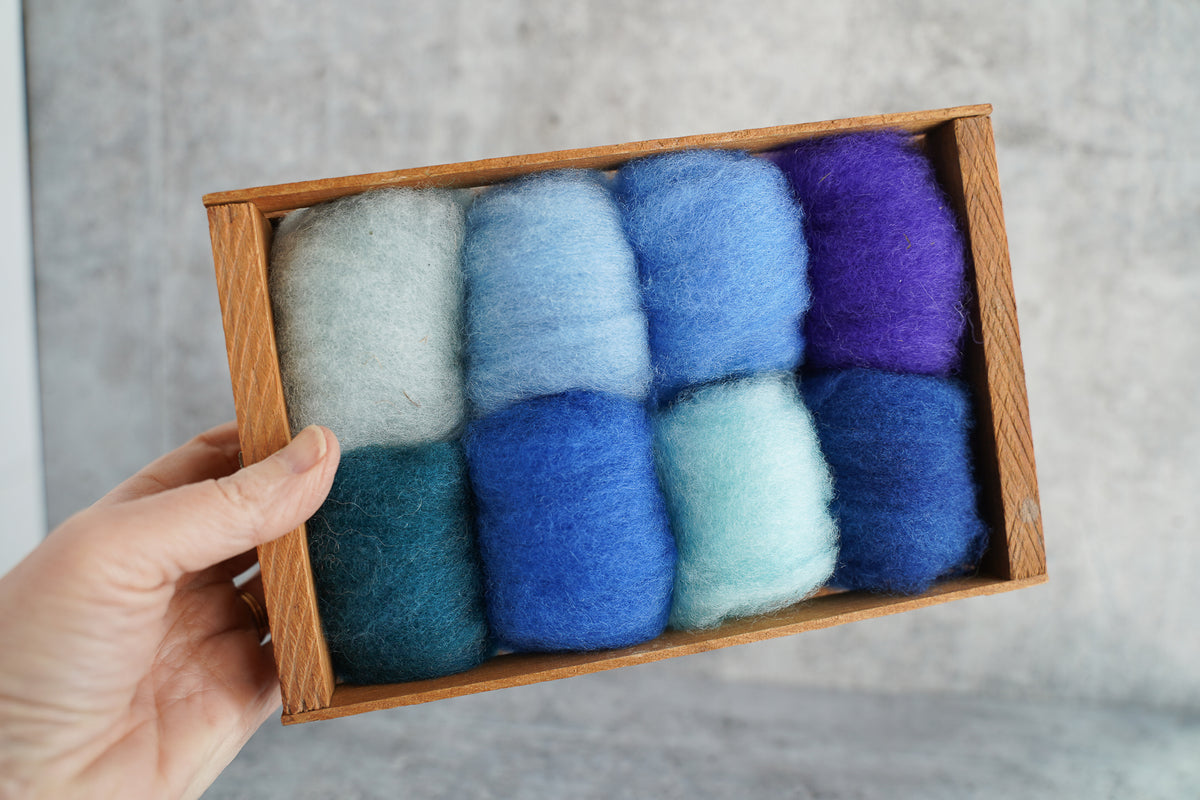
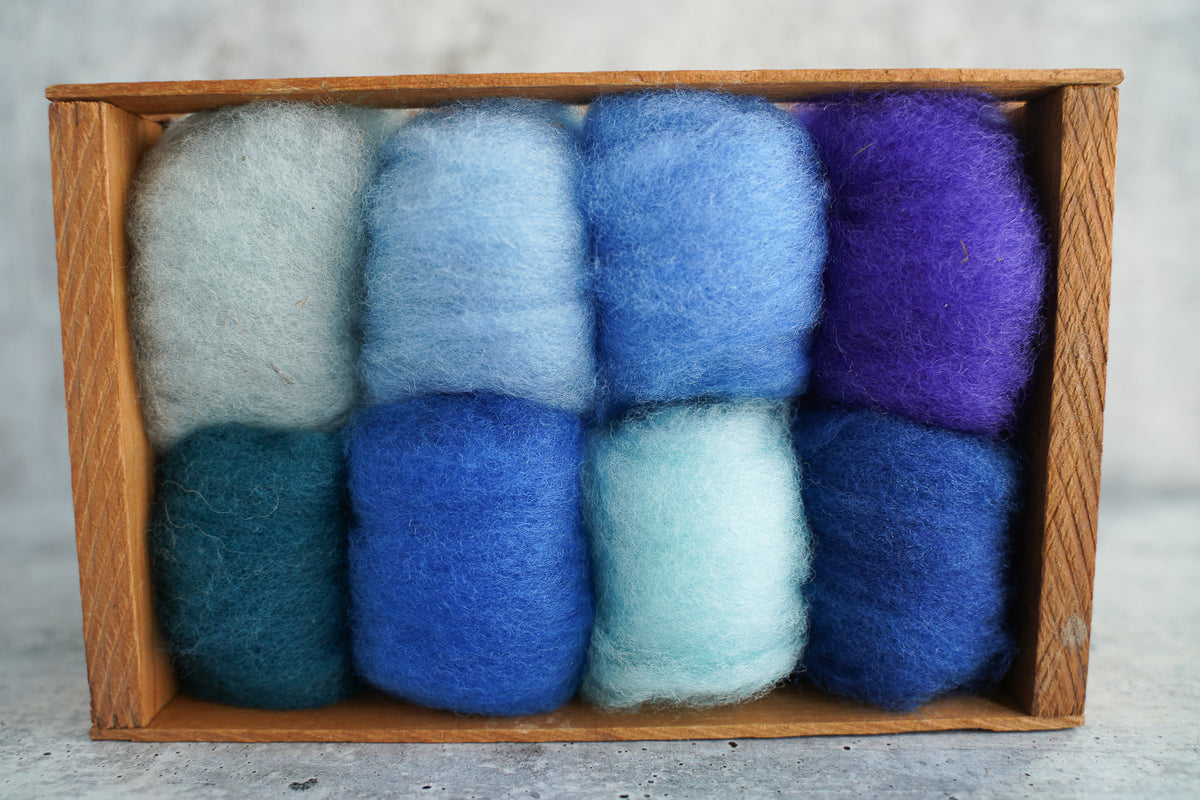
We prepare our wool as carded sliver. Sliver is easy to pull apart, divide into smaller amounts, blend, wrap, shape, and sculpt—all things that make it especially useful for needle felting.
This is the wool you see in our Bear Creek Felting kits and wool selections.

Our Wool Processing Has Come a Long Way
When I first began working with wool, my setup looked very different.
I washed fleece in my sink and carded wool using dog combs. Eventually I purchased a drum carder, which made the process much faster.
As Bear Creek Felting grew, so did the amount of wool I needed to prepare. Over time we invested in the equipment needed to process our wool ourselves, eventually building the fiber mill we use today in Fort Ransom.
It’s quite a change from washing wool in my kitchen sink.
But the reason behind it has stayed the same.
I want to know where my wool comes from, understand how it behaves, and produce wool that I love to needle felt with. Raising the sheep and following their wool all the way from the pasture to the finished project gives me the opportunity to do exactly that.
From pasture to product, the wool really is part of the whole Bear Creek Felting story.
Lorem ipsum dolor sit amet, consectetur adipiscing elit, sed do eiusmod tempor incididunt ut.