How Farm Life Shapes My Needle Felted Animals
How Farm Life Shapes My Needle Felted Animals
People sometimes ask how I know where to put a shoulder, how long a leg should be, or what makes one of my felted animals look like the real thing.
A lot of that comes from spending most of my life looking at animals.
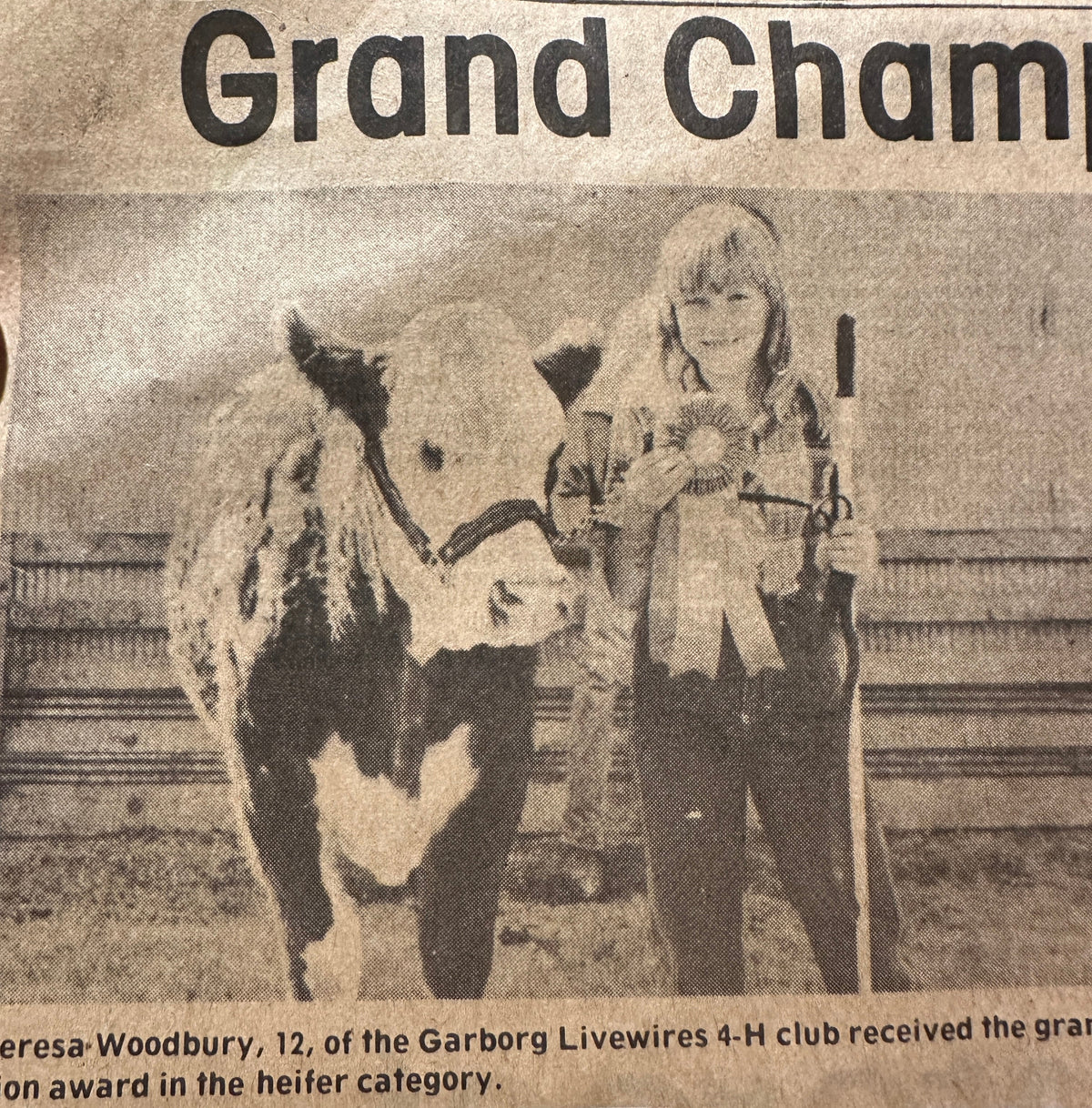
I grew up on a North Dakota farm surrounded by livestock. My dad raised and showed cattle, so some of my earliest lessons in animal anatomy didn’t happen in an art class. They happened in barns, show rings, pastures, and pens.
Years later, when I became a needle felting artist, I realized just how much all of that observation had taught me.

 Our
You Learn to Really Look at an Animal
Preparing livestock for a show teaches you to pay attention to details most people probably never think about.
With cattle, we washed them, blow-dried them, trained them to lead, and learned how to position them so the judge could see them at their best. You learn to notice the topline, the angle of the shoulder, the width of the chest, the placement of the legs, and the balance of the entire animal.
I eventually taught my own kids to do the same.
Sheep are shown a little differently, but the same close observation is required. You learn what a well-balanced animal looks like and how all of its parts work together.
I had no idea at the time that I was also training my eye for sculpture.

Anatomy Matters in Needle Felting
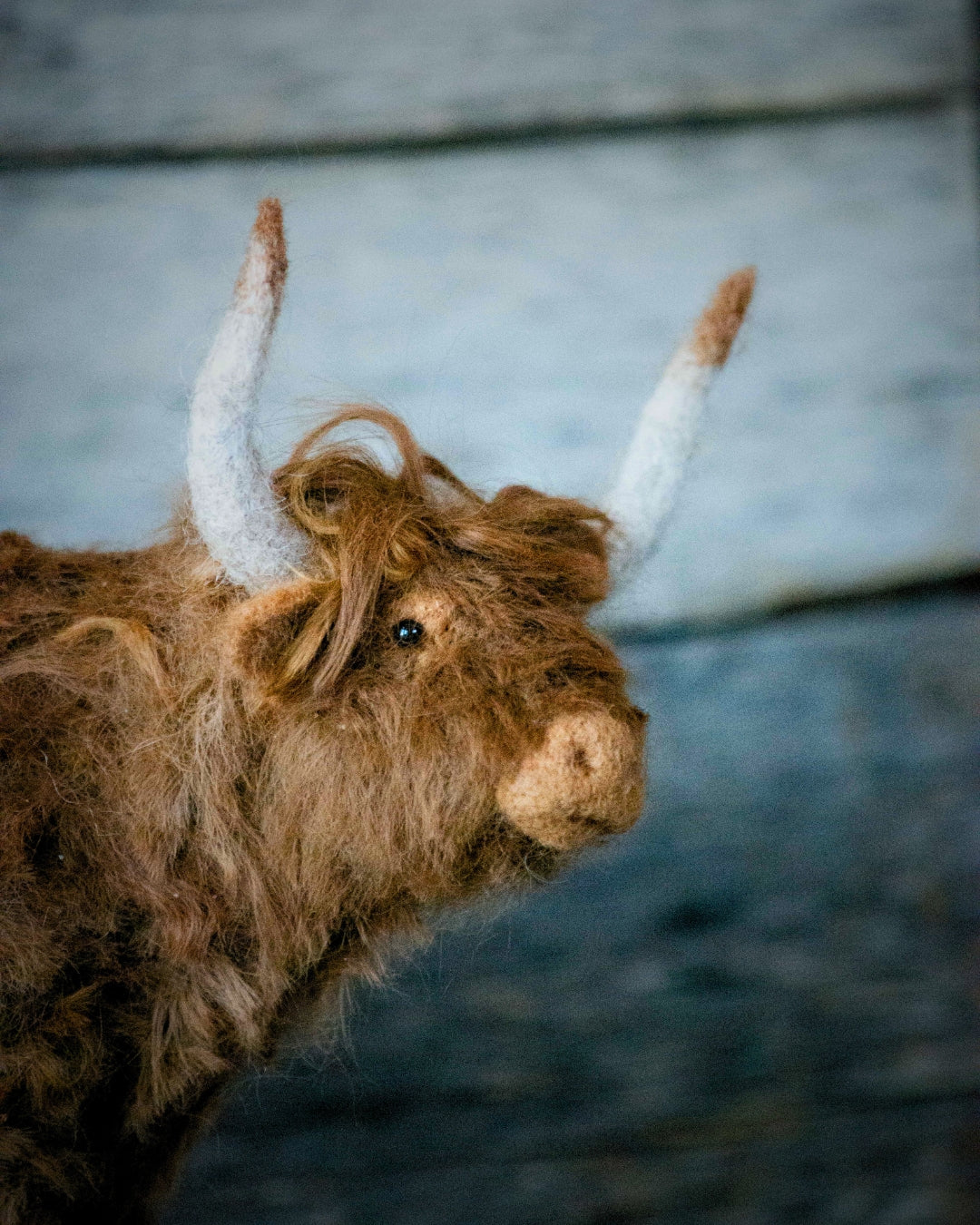
When I needle felt an animal, I’m not simply trying to make something that is cute.
I want it to feel believable.
That doesn’t mean every sculpture has to be perfectly anatomical. Personality matters too. But if the proportions are wrong, something often feels “off” even if you can’t immediately explain why.
Where does the shoulder actually sit?
How does the chest transition into the front legs?
How wide is the head compared with the body?
What happens to the shape of an animal when it turns its head, takes a step, or shifts its weight?
Those are details I’ve spent years watching in real animals.
Sheep Have Taught Me Even More
Today, our farm is home to a large flock of sheep, and I probably study them more closely than ever.
I watch how they stand, how their wool changes the apparent shape of their bodies, how their ears sit, and how their expressions change.
And because we also grow and process their wool, I’m paying attention to another layer entirely: the fleece itself.
The curl, loft, texture, color, and character of wool can vary tremendously from sheep to sheep. Those differences influence both the wool I choose for my needle felting and the breeding decisions we make for the flock.
So when I sculpt a sheep out of wool, there’s something wonderfully full-circle about it.
Sometimes the Smallest Details Make the Biggest Difference
One of my favorite parts of needle felting animals is capturing personality.
An ear tilted slightly differently can completely change an expression. So can the placement of the eyes, the shape of the muzzle, or the angle of the head.
Living with animals every day gives you endless opportunities to notice those little things.
Our sheep have individual personalities. So do the cattle. And our livestock guardian dogs certainly do.
Those details are what I think about when I’m creating a sculpture. I’m not just thinking, What does a sheep look like?
I’m thinking, What makes this sheep feel alive?
The Farm Is Still My Best Art Classroom
I have learned a tremendous amount about needle felting through years of practice, experimentation, and teaching.
But some of my most valuable artistic education has simply come from watching animals.
I can step outside and study how a sheep’s legs connect to its body. I can look at the shape of a nose or the curve of a back. I can watch how an animal carries its weight when it walks.
There is inspiration everywhere.
Maybe that’s why animals continue to be my favorite subjects to needle felt.
The farm gives me the wool I sculpt with—but just as importantly, it gives me the animals that continue to teach me how to sculpt them.