
Is needle felting easy?

Discover the Joy of Needle Felting: A Craft Anyone Can Learn
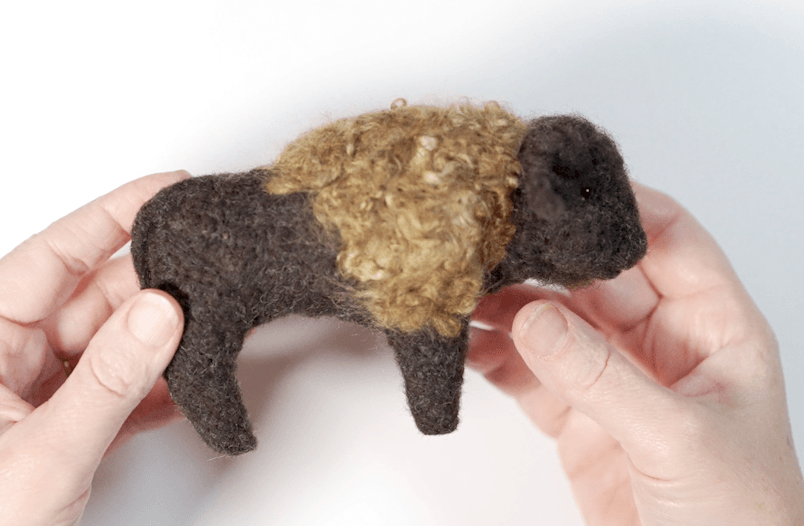
Have you ever looked at a needle felted animal and thought, I could never make that?
You might surprise yourself.
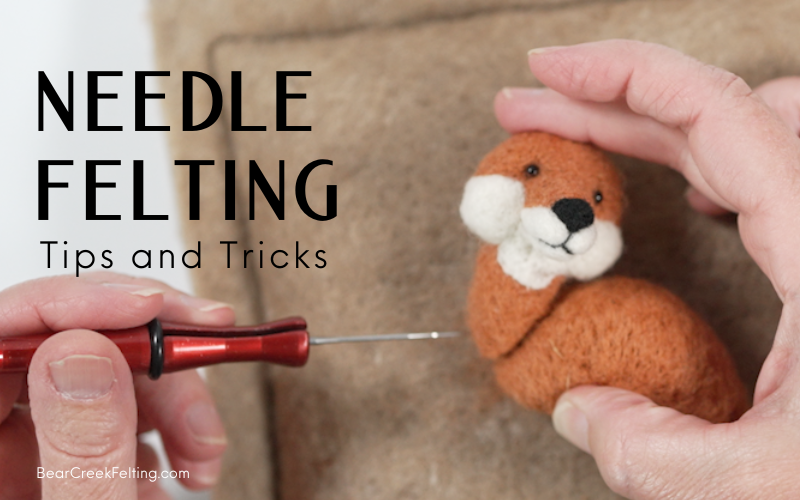
Needle felting is one of those crafts that can look complicated from the outside, but the basic technique is wonderfully simple: you shape wool by repeatedly poking it with a special barbed needle.
The barbs on the needle catch the wool fibers and tangle them together. The more you felt an area, the firmer and more defined it becomes.
With just wool, a felting needle, and a safe felting surface, you can begin turning loose fiber into three-dimensional shapes—and eventually animals, characters, ornaments, and sculptures filled with personality.
Do You Need to Be Artistic?
No previous art or fiber experience is required to begin.
You do need patience.
Needle felting is a process of gradually building and refining a shape. You add wool, felt it, look at the proportions, make an adjustment, and keep going.
That is actually one of the things I enjoy most about it. Wool is very forgiving. If an area needs to be larger, you can add more. If you don't like a shape, you can often adjust it and keep working.
Your first project doesn't need to be perfect.
It just needs to teach you something.
What Are Felting Needles?
Felting needles are not sewing needles.
They are specially made with tiny barbs along the shaft. As the needle moves in and out of the wool, those barbs catch the fibers and help lock them together.
They are also very sharp and fairly fragile, so they need to be used carefully and poked straight into and out of the wool rather than bent sideways.
For that reason, needle felting isn't a craft I would hand to very young children unsupervised. Older children may enjoy it with close adult supervision, depending on their age, patience, and ability.
How Long Does Needle Felting Take?
This is one of the questions beginners ask me most often.
The answer is: longer than most videos make it look.
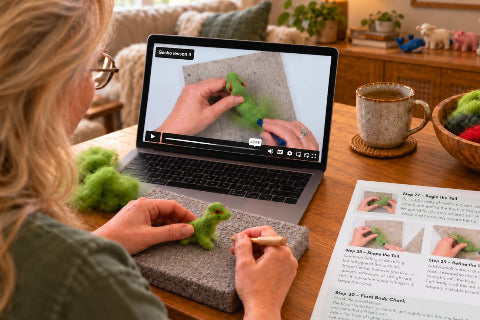
A tutorial may be condensed into 20 or 30 minutes, but the actual sculpture can take several hours—or considerably longer for a large or advanced project.
Needle felting is not really about rushing to the finish.
Part of the enjoyment is watching the shape slowly develop.
That is why I recommend starting with a beginner project rather than jumping immediately into a complicated animal with long legs, intricate markings, or an armature.
Learn the basic movements first. Then build from there.
Good Wool Makes a Difference
The wool you choose can make learning much easier.
I especially love working with the wool from our own flock because I can follow it through the entire process—from the sheep in the pasture to the fiber mill and finally to my felting mat.
Much of our flock has a Romney foundation, and I have found Romney-type wool particularly well suited to the way I needle felt. It firms up nicely, holds a shape well, and makes it possible to build detailed three-dimensional sculptures.
Very fine fibers such as Merino can certainly be needle felted, but in my experience they tend to felt differently and can take longer to become firm.
That is one reason I pay so much attention to the wool we grow. I'm continually evaluating our fleeces not only for how they look and feel, but for feltability.
What Do You Need to Get Started?
You really don't need much:
- Wool
- Felting needles
- A felting cushion or pad
- A beginner-friendly project
One of the advantages of starting with a needle felting kit is that you don't have to figure out which wool, needles, and supplies to purchase separately.
Bear Creek Felting kits include the wool and project-specific supplies you need, along with step-by-step instructions to guide you through the process.
What About Wire Armatures?
Eventually you may want to try projects that use wire.
An armature provides structure and can help an animal stand or hold a particular pose.
I don't generally build a complete wire skeleton inside my sculptures. For many of my standing animals, I use wire primarily in the legs.
My farm background influences that choice.
I've spent much of my life watching livestock, and the way an animal stands—its leg placement, balance, and posture—has a tremendous effect on whether a sculpture looks believable.
But armatures are not something you need to worry about on your first project.
There is plenty to learn before adding wire.
Choose a Simple First Project
A sheep is a wonderful place to start.
The basic body shapes are manageable for a beginner, and you can learn many of the fundamental needle felting skills you'll use again and again: building firm shapes, joining pieces, adding wool, refining proportions, and creating personality.
And once you've made one project, the next one becomes a little easier.
Then the next.
Before long, you'll find yourself noticing things you didn't notice when you first began—the angle of an ear, the shape of a muzzle, the way a leg joins the body.
That's when needle felting starts becoming especially fun.
Keep Learning at Your Own Pace
If you'd like more instruction after your first project, the Bear Creek Needle Felting Academy gives you access to step-by-step projects, video instruction, and a community of other felters.
You can begin with simpler projects and gradually work your way into more detailed sculptures as your skills grow.
But you don't need to master everything before you begin.
Pick up some wool.
Make your first shape.
And see where it takes you.
That is exactly how every needle felter starts.
Lorem ipsum dolor sit amet, consectetur adipiscing elit, sed do eiusmod tempor incididunt ut.