
Why Your Needle Felting Deserves Better Than Merino Wool
Why I Prefer Our Farm-Raised Wool for Needle Felting
Life often takes unexpected turns, leading us places we never imagined. For me, one of those turns started shortly after Libbie and I had learned how to knit.
We were brand new to fiber arts and having fun learning together when Libbie asked for a lamb for her birthday.
Of course, if you’ve ever looked into a lamb’s adorable face, you probably understand why we didn’t come home with just one. Her birthday wish became four Romney sheep — and eventually grew into the flock we raise today.
The woman we purchased the lambs from happened to be a needle felter, and she invited Libbie and me to join her spinning guild. That invitation opened up an entirely new world for us. Through the guild, we learned about spinning, wool, and other fiber arts, and that is where I was introduced to needle felting.
I had never been an artist before. Needle felting was where that part of my life began.
I started experimenting with the wool from our own sheep, learning how different fibers behaved and discovering how much I loved sculpting animals from wool. What began with Libbie and me learning to knit, followed by one birthday request for a lamb, eventually became my art, my business, and Bear Creek Felting.
As my needle felting skills grew, I also began paying closer attention to the wool itself. Over the years, I experimented with different breeds and fibers and learned just how much the wool you use can affect the felting process — especially when you’re creating firm, three-dimensional sculptures.
That experience eventually began influencing the flock itself. I started crossing some of my favorite felting breeds and selecting for the wool qualities I most enjoy working with: fiber that felts readily, builds a firm sculpture, blends beautifully, and still has that wonderful natural wool texture.
1. The Right Wool Helps Build a Firm Sculpture
When I’m sculpting an animal, I want the body to become quite firm.
That firmness gives me a solid foundation so I can shape muscles, faces, legs, and all of the little details that eventually bring an animal to life.
Fine wool such as Merino can certainly be needle felted, but in my experience, it can take more work to build the firm structure I want for my sculptures.
The wool I prefer grabs onto itself readily and felts down firmly, allowing me to create a dense sculpture that holds its shape while I continue working.
It also makes it easier to add additional pieces of wool and blend those additions smoothly into the sculpture.
2. I Can Make Many Animals Without a Full Wire Armature
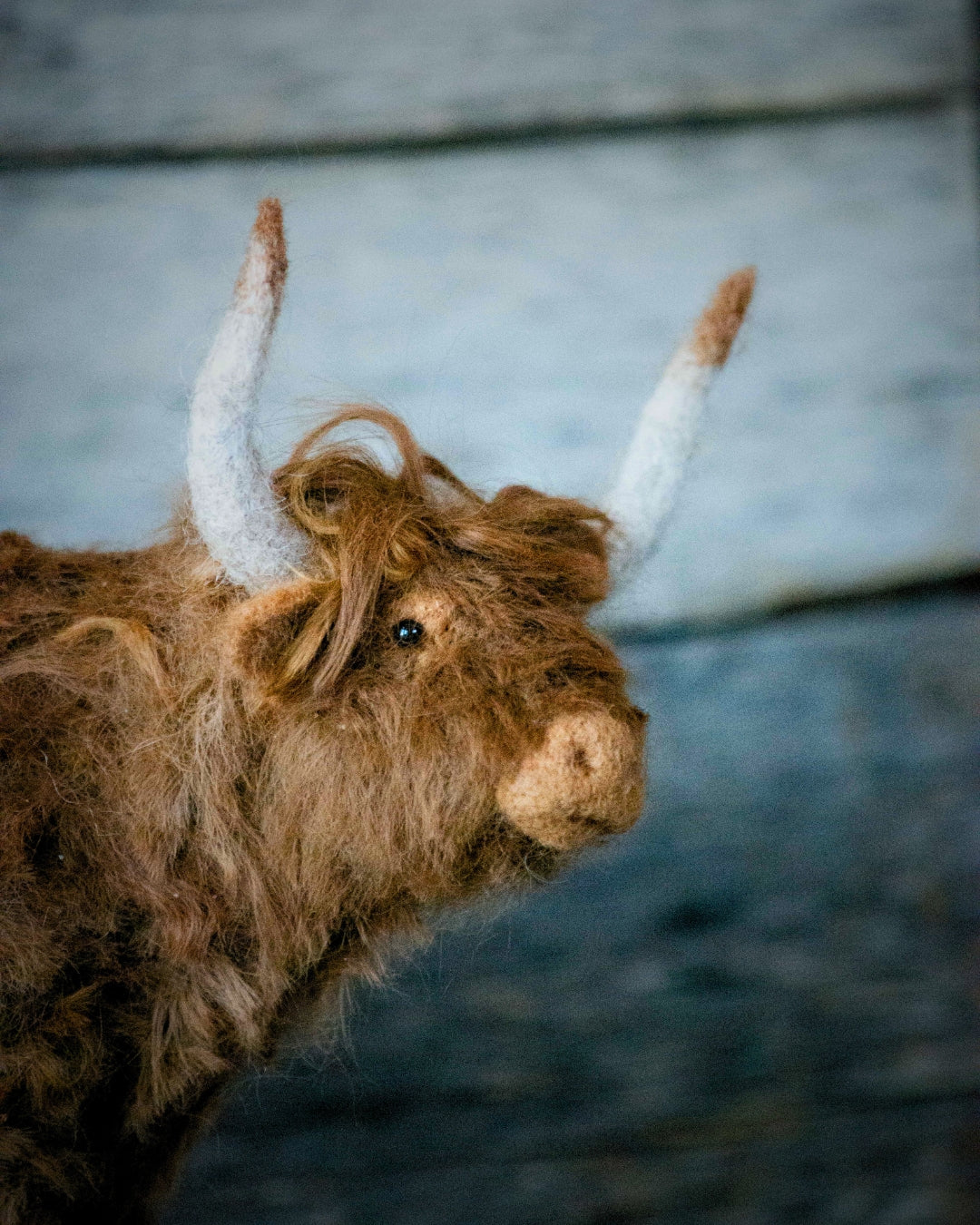
One of the things I love about working with wool that felts firmly is that I don’t need a full wire armature inside most of my sculptures.
That is simply the way I prefer to work.
Felting around wire can be frustrating, and accidentally hitting the wire is also a pretty good way to break a felting needle!
There are certainly times when I use wire, especially when a project needs very thin legs, extra support, or a particular pose. But many of my animals are built almost entirely from wool.
Once you learn how to create a really firm wool foundation, you may be surprised by how much you can sculpt without wire.
3. It Gives Me the Texture I Want
Merino is wonderfully soft, and sometimes that is exactly what you want.
I may use softer fibers when I want to create a fluffy coat or add a special finishing texture. But for the main structure of my sculptures, I want wool that gives me both control and firmness.
I also love wool that still looks and feels like wool.
The fiber from our flock gives my sculptures a beautiful natural surface while allowing me to build the solid structure I need underneath.
From Raising Sheep to Raising Better Felting Wool
One of my favorite parts of Bear Creek Felting is knowing where the wool I work with begins.
It starts right here with the sheep on our North Dakota farm.
Over the years, my flock has evolved as I’ve learned more about wool and more about what I love working with as a needle felting artist. I’ve crossed some of my favorite felting breeds and selected for the characteristics that are most important to me.
I want wool that felts readily.
I want it to build a firm sculpture.
I want fibers that blend beautifully when I’m adding shapes and details.
And I want the finished piece to retain the wonderful character and texture of real wool.
The sheep grow the wool, we shear them, process the fiber, and eventually that wool ends up in someone’s hands ready to become something completely new.
A sheep can become a bear, a giraffe, a chicken, a snowman — or just about anything else we can imagine.
After all these years, I still think that’s pretty amazing.
So, What Is the Best Wool for Needle Felting?
There really isn’t one wool that is best for every kind of felting.
If you’re wet felting, making clothing, creating very soft surface textures, or working in a completely different style, you may prefer a very different fiber.
But if your goal is to create the kind of firm, three-dimensional needle felted sculptures that I make and teach, I recommend choosing wool based on how well it felts and how easily you can build a solid structure with it — not simply by how soft it feels in your hand.
That’s one reason I’ve spent years developing a flock around the wool qualities I love for needle felting.
The right wool won’t do all the work for you — there will still be plenty of stabbing! — but it can make the process much easier and much more enjoyable, especially when you’re learning.
If you’re just getting started, explore our beginner-friendly needle felting kits to learn the basics, or browse our needle felting wool for your next project.
And if you’d like to continue building your skills, join me inside the Bear Creek Needle Felting Academy, where we dive deeper into techniques for creating firm, detailed sculptures from wool.
Happy felting!
Teresa
Bear Creek Felting

