


Tips for Needle Felting with Arthritis
Needle Felting With Rheumatoid Arthritis
I have rheumatoid arthritis, so I know firsthand that repetitive hand movements can sometimes make needle felting more difficult. Over the years, I’ve learned to adjust the way I work, the tools I use, and how long I felt at one time so I can continue doing something I love.
The ideas I’m sharing here are simply things that have helped make needle felting more comfortable for me. Everyone’s hands and abilities are different, so use what works for you and skip what doesn’t.
Adjust how you needle felt.
Whether you’re used to sitting at the dining room table or on the couch, you’ll want to start considering your workspace and posture.
Create a space that’s the perfect height for you. If it’s too low, you’ll have to hunch over causing back pain. If it’s too high, your shoulders and neck will start to tense up.
They make adjustable craft tables, but to be honest, they’re pretty pricey! With a little creativity and patience, you might be able to find a table that suits you at your local second-hand shop.
For your chair, you’ll want to find an adjustable desk chair without arms so that you’re not inhibited in your movements. While you work, be mindful of your positioning. Try to align your arms and elbows!
Make sure to take a break every 30 minutes or so. Your fingers, back, and legs can always use a stretch.
Make your tools easily accessible.
Bending down, digging in the back of the cupboard, reaching high up on a shelf—don’t strain your body before you even get started! Sort through your needle felting supplies and keep them organized on a flat surface.
Keep all of your needles, wool, and felting pillows in their own organized areas so that you have easy access whenever you feel like sitting down to work on a project.
Use the Tools That Feel Best in Your Hand
You don’t have to use a multi-needle tool just because it holds several needles. I actually do most of my felting with a single needle.
When I do use my six-needle holder, I often put only three needles in it. Using all six takes more force, and I find three is usually plenty for the times I want to felt a larger area more quickly.
As your project becomes firmer, switching to a finer needle can also make it easier to continue felting without having to force a larger needle into dense wool.
There is no one “correct” tool setup. Use the number and type of needles that makes felting comfortable and enjoyable for you.
Learn at Your Own Pace
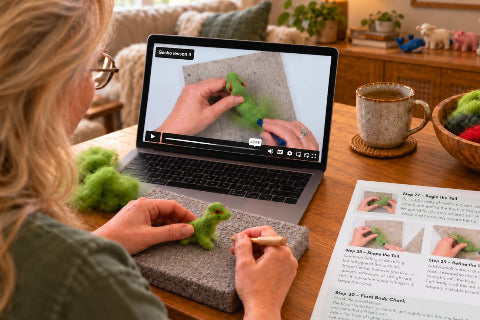
One of the nice things about needle felting is that there is no need to rush. You can work for a few minutes, put your project down and come back to it whenever you are ready.
Inside the Bear Creek Needle Felting Academy, members can work through complete project courses at their own pace and ask questions or share their progress with the community along the way.

