
Needle Felting FAQs:
Your Guide to Getting Started and Beyond

What Is Needle Felting?
Needle felting is a craft that uses specially designed notched needles to sculpt wool into shapes and designs. The notches on the needles tangle the wool fibers, causing them to interlock and form firm structures. This versatile craft allows you to create anything from simple 2D flat pieces to intricate 3D sculptures.
If you’re new to needle felting, it’s important to use high-quality wool that felts easily and stays firm, especially for beginners.
What Do I Need to Start Needle Felting?
To get started with needle felting, you’ll need:
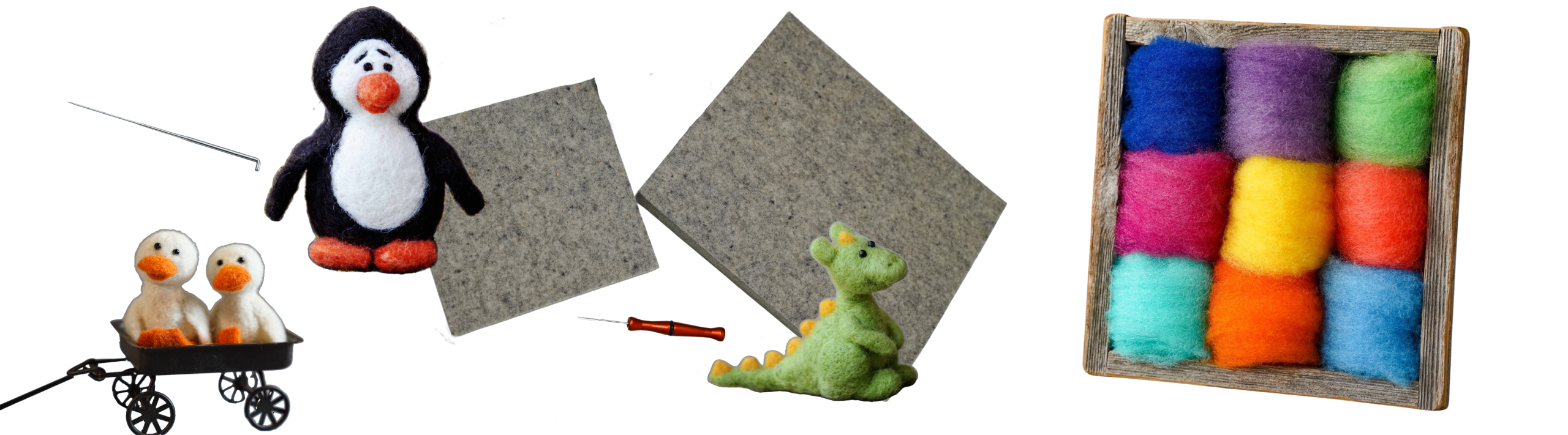
- Wool: All wool felts differently and some doesn’t felt at all, learn more about wool for felting here.
- Felting Needles: These come in various sizes, and shapes for different types of wool and different steps in the creation process.
- A Cushion or Pad: Foam or wool pads are used to needle felt on to protect your work surface and your needles.
- Optional Extras: Needle holders for comfort, Multi tools for speed, glass eyes and wire.
Starter kits are an excellent way to begin, as they provide all the essential materials and guidance for your first project.
Is Needle Felting Hard to Learn?
Not at all! Needle felting is beginner-friendly, and many find the repetitive motions relaxing. The learning curve involves mastering basic shapes and understanding how different wool types behave. With practice, you can create more detailed and complex designs. (More on this topic)
Beginner kits with step-by-step instructions can help you gain confidence as you start.

How Long Does It Take to Needle Felt a Project?
The time required depends on the size and complexity of the project:
- Small Projects: Simple shapes, like ornaments or basic animals, can take 1-3 hours.
- Medium Projects: More detailed creations may take 4-8 hours.
- Large or Complex Projects: Intricate sculptures with multiple parts could take several days.
Needle Felting requires patience and enjoying the process, it is not a quickly completed craft. Using wool with superior felting qualities can speed up the process and result in better-defined details.
What Types of Wool Are Best for Needle Felting?
Not all wool is created equal for needle felting. Here’s a breakdown of commonly used types:
- Romney Wool: Firm and fast-felting, ideal for sculptural work.
- Merino Wool: Soft and smooth, great for wet felting or adding soft textured details. Not the best for 3D sculptures.
- Wensleydale Wool: Shiny and curly, perfect for creating texture.
- Corriedale Wool: Felts quickly and easily.

Can I Use Other Fibers for Needle Felting?
While wool is the most common material, other fibers like alpaca, mohair, or silk can also be used. However, some may not felt as easily or require blending with wool for the best results.
What’s the Difference Between Needle Felting and Wet Felting?
- Needle Felting: Involves sculpting with notched needles. Ideal for detailed work and 3D designs.
- Wet Felting: Uses hot, soapy water to agitate wool, creating a smooth felted fabric. Often used for flat pieces, like scarves or fabric panels.
Some projects combine both techniques, such as using wet felting to create a base and needle felting for details.

How Do I Care for Needle Felting Projects?
Needle-felted items are durable but delicate:
- Avoid heavy handling to prevent deformation.
- Dust gently with a soft brush.
- Keep away from pets, as wool can be irresistible to them!
If your project loses its shape, a little touch-up with a needle can help restore it.
What’s the Difference Between Roving, Batt, and Cloud Wool?
- Roving: Smooth, aligned fibers; great for details and precision work.
- Batt: Fluffy sheets with random fibers; excellent for building core shapes.
- Cloud: Loose, airy fibers; perfect for soft textures or accents.
The good news? They all work great for needle felting!
Learn to Needle Felt the Easy Way!


Join the Bear Creek Needle Felting Academy today!


Check Out The Bear Creek Needle Felting Academy

No matter where you are in your needle felting journey—whether you’re a beginner taking your first steps or a seasoned artist seeking to enhance your skills—if you aspire to create awe-inspiring sculptures that exude character and personality, then the Bear Creek Needle Felting Academy is the perfect fit for you.
Within the Academy, you’ll find exclusive access to unparalleled training, unwavering support, constructive feedback, and valuable advice. These invaluable resources will empower you to elevate your needle felting to new heights, surpassing your current abilities and achieving remarkable results.

For your Water Buffalo Collection . . .
You can call him a Water Buffalo or a Cape Buffalo. Since I was on an African Wildlife kick I started out calling him a Cape Buffalo. I just started reading "The Land I Lost" by Huynh Quang Nhuong to my kids and now I call him a Water Buffalo named Tank. :-)...

Top 10 of 2012
Teresa Perleberg's top 10 favorites of 2012 10. This was the third moose I have made. Still one of my Favorites! 9. The Second Big Horn Sheep I have made. The first was a family favorite so I made another. 8. This little guy went "Viral" on Pinterest...

Trying a New Medium
I signed my kids up for pottery classes this last year and things haven't been the same around here since. We now travel the 25 miles to town once a week to play with clay and other wonderful artsy stuff. When you drive 25 miles to town you don't just drop your kids...
Frequently Asked Questions
Getting Started
What do I need to start needle felting?
To start needle felting, you need wool, felting needles, and a work surface. These basic supplies often come in beginner-friendly kits. My kits include sustainably raised wool from my own flock, beginner-ready instructions, and optional tools depending on your needs.
Is needle felting hard for beginners?
Needle felting is easy to learn with the right materials and guidance. The quality of the wool makes a big difference. My kits may look detailed, but the instructions are written for beginners so you can build confidence quickly.
What should I felt first?
I recommend starting with a beginner-friendly animal or shape that teaches firmness, shape-building, and basic structure. My Duckling, Snowman, and simple Farm Animals are perfect first projects.
Wool & Materials
What kind of wool is best for needle felting?
Wool with good crimp and spring, prepared specifically for felting, is best. My wool comes from sheep raised using rotational grazing and is processed entirely in-house for consistency and predictable felting behavior.
What makes Bear Creek Felting wool different?
Our wool is grown on my North Dakota farm, raised using sustainable rotational grazing, and processed entirely in-house. This allows full control over quality, consistency, and preparation — which means better results and less frustration for you.
Do I need a special surface or cushion to needle felt on?
Yes. You need a felting cushion or pad to protect your needles and your work surface. I offer both beginner foam options and long-lasting 100% wool felting pads made in the USA.
Kits
Why do your kits look advanced if they’re for beginners?
My animals and sculptures have detail, structure, and expression — but the instructions break everything into achievable steps. You learn more because of the detail, not in spite of it. Many beginners surprise themselves with what they can create.
Are your kits suitable for children?
With supervision, older children and teens can safely use felting needles. They are sharp tools, so adult guidance is required. Mostly, needle felting takes patience, my kits will generally take 2-3 hours to complete.
Can I buy wool or supplies without a kit?
Yes. I offer batch-dyed wool and natural colors — all prepared specifically for needle felting. Supplies like needles, pads, and tools are also available individually.
Do your kits include everything I need?
You can choose between complete kits or kits without tools. Complete kits include wool, instructions, needles, and a felting cushion. The “no tools” option is available for returning felters who already have needles or a pad.
Academy + Learning
Do you teach needle felting online?
Yes. The Bear Creek Felting Academy offers video courses, step-by-step lessons, community support, monthly projects, and ongoing coaching so you can continue growing your skills at your own pace.
Do you offer in-person needle felting retreats or classes?
Yes. I host multi-day retreats and workshops that focus on learning, creativity, and community. These events combine hands-on instruction, meals, connection, and expressive needle felting projects.
Can beginners join the Academy?
Absolutely. Many members join with little to no experience. Lessons are structured to help total beginners build skill, confidence, and understanding at a comfortable pace.
What if I get stuck?
Each kit includes detailed instructions, and Academy members can ask questions, post progress, and get guidance directly from me and the community.
Farm + Business
Where is Bear Creek Felting based?
Bear Creek Felting operates in Fort Ransom, North Dakota, with our studio and wool-processing mill located in town and our sheep raised on our nearby family farm just seven miles away.
How many sheep do you have?
We care for a flock of approximately 350 sheep. Their wool is the foundation for all of our felting kits, wool colors, and educational projects.
What breeds of sheep do you raise?
We raise Romney crosses, CVM, Corriedale, and other carefully selected wool breeds chosen for their crimp, consistency, and excellent felting behavior.
When do you shear your sheep?
We shear once a year, right before lambing season.
Do you process your own wool?
Yes. Our wool is raised on our farm and then processed at our own mill in Fort Ransom. This gives us full control over washing, carding, dyeing, and preparation so the wool is the best quality for our customers.
What does “pasture-to-product” mean?
“Pasture-to-product” means we raise the sheep, shear them, process their wool at our mill, dye it in small batches, design the kits, and teach the techniques — all within our own farm and studio system. Every step stays in our hands.
How long have you been in business?
Bear Creek Felting was founded in 2008. Teresa has been needle felting for over 19 years and teaching thousands of makers through kits, courses, classes, and retreats.
Is Bear Creek Felting a woman-owned business?
Yes. Bear Creek Felting is a woman-owned, pasture-to-product needle felting company dedicated to sustainable wool, thoughtful design, and confident teaching.
Do you offer farm tours or in-person experiences?
We offer seasonal classes and multi-day needle felting retreats that highlight our wool, techniques, and community. While the farm itself is private, our Fort Ransom studio hosts events and showcases our wool and kits.
Can I visit your storefront?
Yes. You can shop kits, supplies, and wool at our Fort Ransom storefront. Hours vary seasonally, so checking ahead is recommended. 107 East Main, Fort Ransom, ND